
The short answer
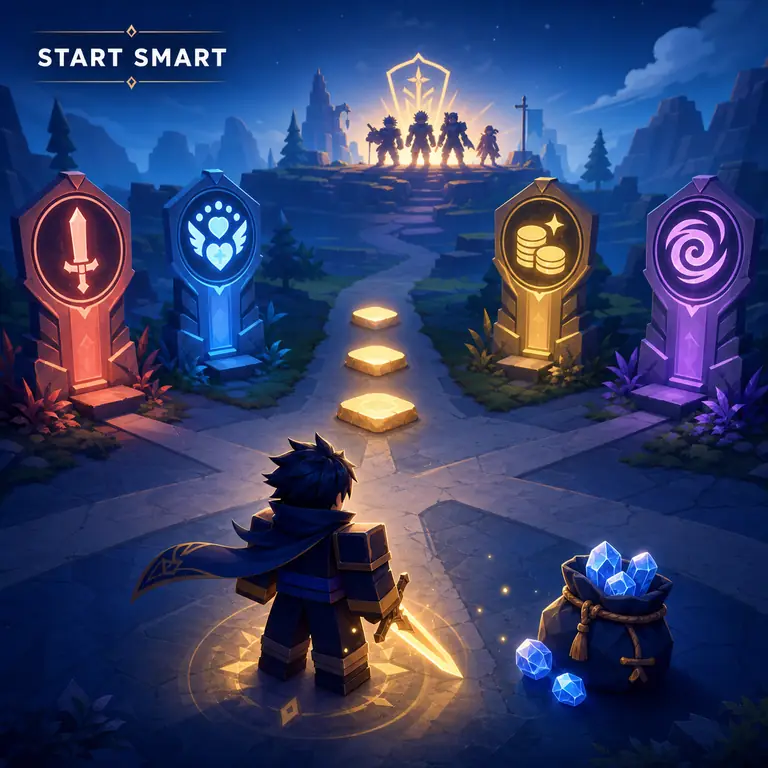
Start with one dependable damage unit, then add support, economy, and control only when each role solves a visible problem. Check the current Anime Vanguards codes page before spending, use the tier list for broad role context, and keep enough gems or materials for the next account milestone. Do not reroll traits, Memoria, or a banner unit just because a screenshot calls it best. A good beginner account is the one that clears its next stage consistently and still has resources for the decision after it.
What to do first in Anime Vanguards
A new account usually loses time by making too many permanent decisions too early. Before chasing a rare unit, open the official Roblox experience, read the current reward and banner text, and write down what your account actually owns. Redeem any code that is still accepted, but treat code rewards as a temporary boost because status and reward values can change without a stable public schedule.
Your first target is not a complete endgame roster. It is a repeatable clear of the next piece of content. Choose one main damage dealer that you can afford to place and upgrade, then ask which role is causing the first failure: low opening damage, poor range, weak wave coverage, missing control, or a broken economy curve. That answer should decide your next unit more often than a screenshot of a popular team.
- Record your starting units, gems, rerolls, and upgrade materials.
- Check codes and current update notes before making a summon plan.
- Set one near-term clear goal instead of trying to own every high-tier unit.
Build a starter team by role
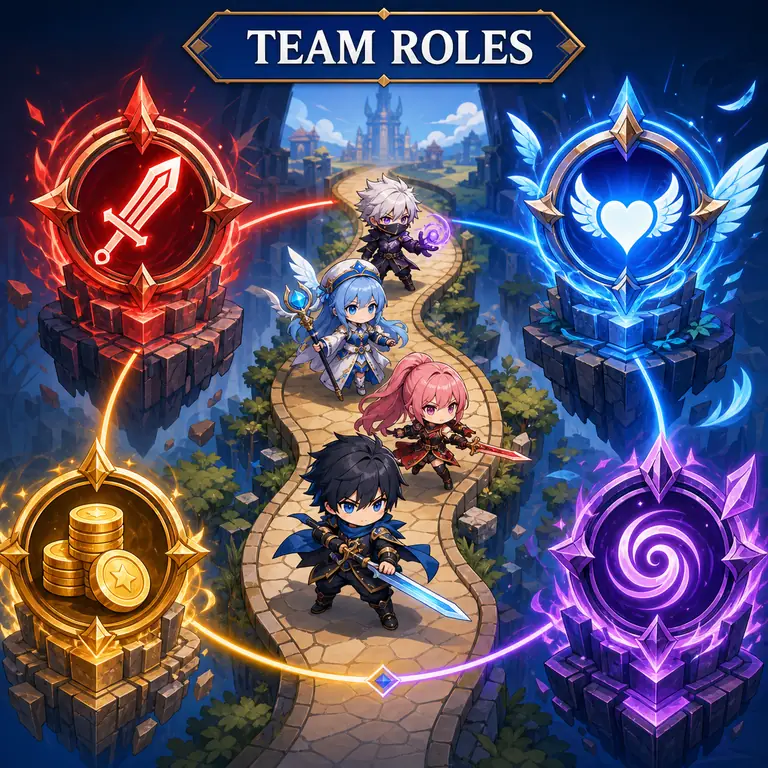
A beginner team is easier to improve when every slot has a job. Damage handles the main wave or boss check. Support improves uptime, range, survivability, or consistency. Economy helps the team reach its next placement or upgrade without collapsing. Control or utility buys time, groups enemies, slows a route, or fixes a stage condition. You may not have a perfect option for every role, but naming the missing job makes a weaker unit easier to evaluate.
Start with the smallest useful shell: one reliable carry, one affordable bridge for the opening, and one support or economy answer if the stage needs it. Add control when enemies escape or when a long route creates timing pressure. The Anime Vanguards tier list is useful for comparing role context, while the units database is better for checking what a particular unit is supposed to do. These pages support the decision; they do not replace a test with your own roster.
- Damage: solve the first wave and the main boss check.
- Support: improve coverage, uptime, range, or survivability.
- Economy: reach the next meaningful upgrade without starving the team.
- Control or utility: buy time when route pressure is the real problem.
Protect gems, codes, and scarce materials
The fastest way to make a new account feel stuck is to spend every resource on the first attractive option. Use the codes page before planning summons, but do not assume a listed code is permanent. Then divide your budget into three parts: the amount reserved for the next progression milestone, the amount needed to fix the current bottleneck, and only the remainder for optimization. This prevents a small upgrade from delaying a much larger clear improvement.
Use a stop rule before you open a summon, trait, or upgrade menu. For example, decide that you will stop when the unit can clear the next target stage, when a support effect covers the missing route, or when the next roll would only improve a number without changing the run. The exact currency cost and reward table can change after an update, so the decision rule is more durable than a fixed shopping list.
- Claim accepted rewards before comparing how much you can spend.
- Reserve resources for the next stage, evolution, or account milestone.
- Spend on a visible bottleneck before chasing a marginal stat improvement.
Use a simple upgrade order
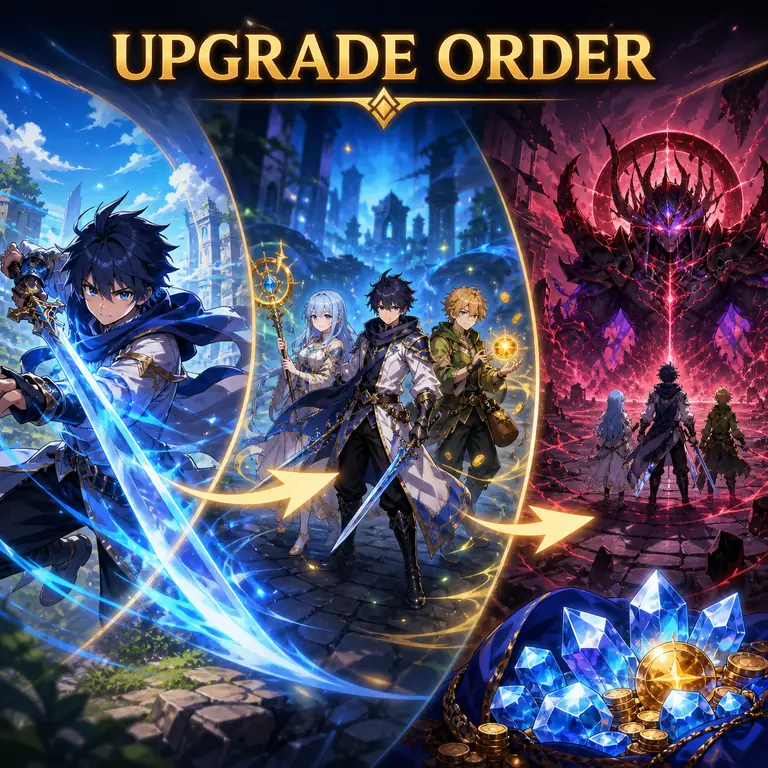
Upgrade order should follow the moment your run fails. If the opening leaks, fund a cheaper bridge or early damage before a late-game carry. If waves are stable but the boss timer fails, move resources toward reliable boss damage, cooldown timing, or support uptime. If the team clears but cannot afford the next placement, an economy fix may be worth more than another damage level. The best upgrade is the one that changes the failure you can actually observe.
A practical sequence is to make one carry functional, add the cheapest role that prevents the first failure, stabilize the economy, and only then optimize traits, Memoria, or a second damage option. This order leaves room to react to updates and prevents early materials from being trapped in a unit you no longer use. Re-check the current update page when a new stage, unit, reward system, or balance change changes the job your roster must perform.
- First: make one carry reliable enough for the next clear.
- Second: fix the earliest failure with a bridge, support, or control unit.
- Third: stabilize economy and only then optimize the roster.
Test progress instead of guessing
A useful beginner test changes one variable at a time. Keep the stage, placement, support, and upgrade level comparable, then record the first leak, the wave where the team loses control, the boss timer, and whether the economy can recover. A unit that looks weaker on a tier list may be the better choice if it solves your opening problem with less investment. Conversely, a high-ranked carry is not a beginner upgrade if it only becomes useful after the account has already failed.
Write the test date beside any conclusion. Anime Vanguards is an active Roblox experience, so public names, values, rewards, and role strength can change. Separate what you saw in the current game from what you inferred from a community guide. That habit makes your own tier decisions easier to update and stops old videos or copied lists from controlling your account plan.
- Compare the first failure, not only the final win or loss.
- Change one unit, upgrade, or role at a time when testing.
- Date your notes and re-check them after a meaningful update.
Common mistakes that slow new accounts
The most common mistake is treating a tier letter as an instruction to spend. A ranking is context, not a guarantee that the unit fits your stage, budget, or role gap. Another mistake is stacking several damage units while ignoring economy or support. The result can look strong in a screenshot but fail before the expensive units are online. Build for the first problem your account has, then replace bridge pieces when the roster has a stable foundation.
Do not make an expensive trait or Memoria decision before you understand the unit's job. The trait guide is for a real trait problem, and the Memoria guide is for a progression effect that changes a measurable decision; neither should become a default first purchase. Finally, avoid fake play areas, scripts, hacks, account sales, and item trading pages. Use official Roblox surfaces for the game and keep this site focused on planning, rankings, and update-aware explanations.
- Do not spend because a screenshot labels a unit as universally best.
- Do not fill every slot with damage before checking support and economy.
- Do not confuse a community claim with a verified current game rule.
- Do not use unofficial pages that ask for account access, scripts, or trades.
First-account decision table
Use the first visible bottleneck to choose the next action. The table is a planning aid, not an official unit ranking or permanent build order.
| Visible problem | Best first move | Delay or avoid | Why |
|---|---|---|---|
| Opening leak | Affordable early damage or bridge | Late-game carry only | The account is failing before an expensive core can work. |
| Wave collapse | Coverage, control, or support uptime | Another narrow damage slot | Dense routes punish a team with one type of answer. |
| Boss timer | Reliable boss damage and cooldown support | A unit that only clears waves | Wave speed does not prove the team can finish a long check. |
| Resource shortage | Economy or delayed upgrade order | Marginal stat chasing | The run is losing to budget timing rather than a missing tier letter. |
| Unclear role | Units page and one controlled test | Blind trait or Memoria spending | You need a job and a baseline before evaluating an upgrade. |
Seven-step starter checklist
1. Record the account
Write down units, gems, rerolls, materials, and the next stage or milestone you want to clear.
2. Check current rewards
Review the Anime Vanguards codes page and verify each reward in the current Roblox experience before budgeting it.
3. Choose one carry
Pick a damage unit you can actually place and upgrade, not only the highest name on a screenshot.
4. Name the missing role
Decide whether the first failure needs early damage, support, economy, control, range, or boss pressure.
5. Spend in stages
Reserve the next milestone, fund the bottleneck, then use leftover resources for optimization.
6. Run a controlled test
Keep the comparison fair and record the first leak, wave failure, boss result, and recovery curve.
7. Stop when it works
Keep a functional result when the next roll is only theoretical, and revisit the plan after a meaningful update.
Anime Vanguards beginner guide FAQ
What should I do first in Anime Vanguards?
Record your starting roster and resources, check accepted codes, choose one affordable carry, and identify the first stage problem before spending on summons or rerolls.
What is the best beginner team in Anime Vanguards?
There is no permanent best team for every account. Start with dependable damage, then add the support, economy, or control role that fixes your current failure. Use the tier list for context and test the result in your own stage.
Should beginners spend gems on traits or summons?
Usually reserve enough gems for the next account milestone first. Spend on a trait only when a real unit role is blocked, and spend on a summon only when the unit improves a missing job rather than adding another copy of the same damage role.
Are Anime Vanguards codes safe to use?
Use the in-game redemption surface and verify the current status. This site reports code notes as community or checked information; codes can expire and should not require account credentials, scripts, or unofficial downloads.
When should I use the Anime Vanguards tier list?
Use it when you need broad role or meta context, then compare that context with your roster, budget, stage, and first failure. A tier letter should guide a test, not replace one.
Do beginners need a trait or Memoria guide immediately?
Not always. Learn the unit's job and stabilize the first clear first. Open the trait guide for a specific trait decision and the Memoria guide when a progression effect can be tested against a measurable bottleneck.
Summary
The best beginner route is a sequence, not a shopping list: record the account, check rewards, build one reliable carry, fill the missing role, protect the next milestone, and test each meaningful change. Use the Anime Vanguards tier list, units database, codes tracker, and update notes as decision support while keeping the current in-game result as the final check.
This page is an independent editorial guide. Exact unit values, code rewards, banner availability, traits, Memoria effects, and stage rules can change after an update. Re-check the current Roblox experience before making a costly decision.
Sources and limits
This is an independent fan guide, not an official Roblox or Anime Vanguards page. The starter sequence and decision table are editorial recommendations. Verify current rewards, unit values, banners, traits, and stage rules inside the official Roblox experience; the illustrations below are concept art, not official screenshots.