
The short answer
Do not ask whether a trait is universally best. Ask whether it improves the job this unit must do in your current team. A main DPS usually wants a trait that improves reliable damage or consistency; a support unit may gain more from uptime, range, or survivability; an economy unit is valuable when the trait helps the team reach its next spending breakpoint. Because public trait names, costs, and balance values can change, this page uses a role-first decision method rather than inventing an official tier for every roll.
What traits actually change
A trait is not a replacement for a unit's base role. It changes how efficiently that role appears in a run. The same bonus can feel excellent on a damage carry and disappointing on a support unit if the support unit is limited by range, cooldown, survivability, or placement rather than raw damage. Start with the unit's job, then read the trait as a modifier to that job.
The useful question is not only how large the displayed number looks. Ask whether the effect crosses a practical breakpoint: one fewer attack to defeat a common enemy, one more cast during a boss phase, enough range to cover a second lane, or enough economy to place the next unit on time. These are account outcomes, not promises of a universal best roll.
- Separate stable facts from assumptions. A visible in-game value is a fact for that version; a recommendation about long-term value is editorial judgment.
- Compare a trait with the unit's actual bottleneck. Damage does not solve a range, cooldown, or placement problem automatically.
- Record the update date before comparing screenshots or community notes. A new patch can change the same trait's practical value.
Choose traits by role, not by rarity
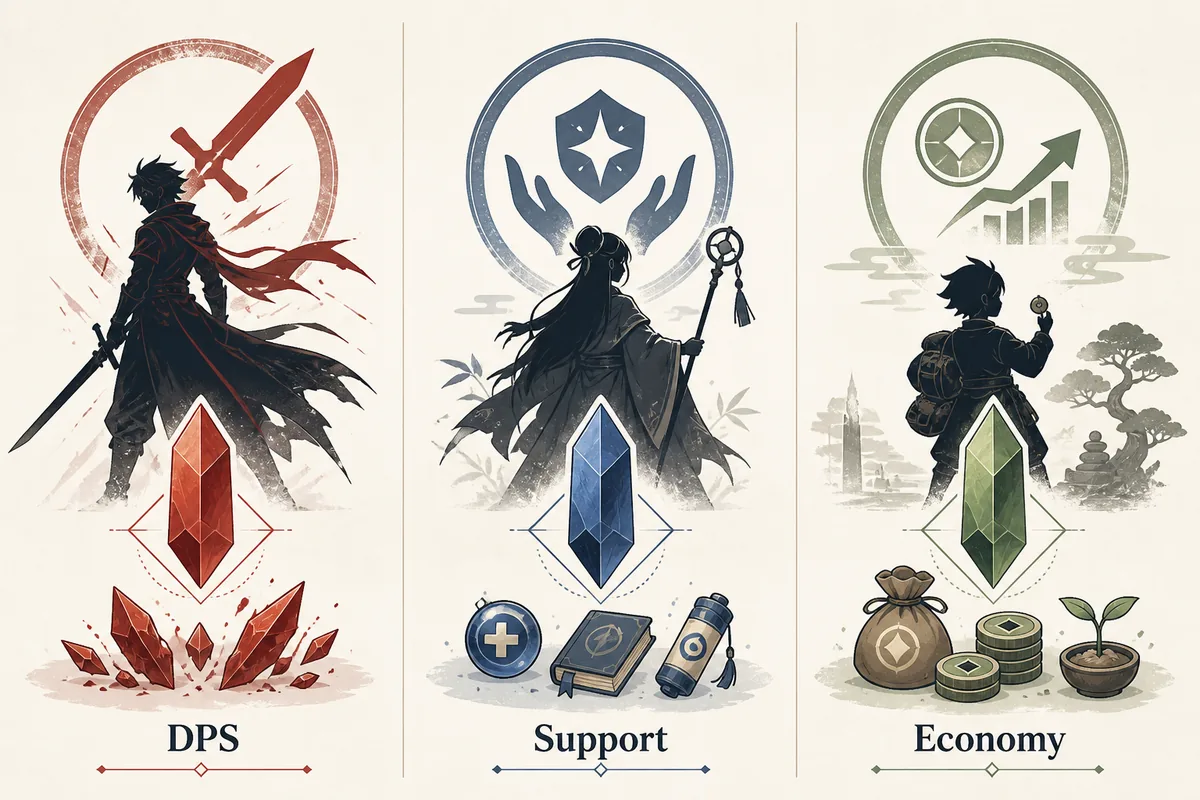
For a main DPS, prioritize consistency first. A trait that turns near-misses into reliable clears can be more useful than a higher theoretical ceiling that only works with a perfect support setup. For boss DPS, check whether the trait matters during the boss window rather than only during easy waves. For wave clear, ask whether the bonus changes the number of attacks or placements needed in the stages you actually farm.
Support and economy units need a different test. A support trait is valuable when it improves uptime, coverage, or the unit's ability to survive its placement. An economy trait matters when it brings forward a meaningful purchase or stabilizes a long run. If the trait does not change a real decision, keep your resources instead of rerolling for a prettier label.
- DPS: check damage consistency, attack cadence, boss timing, and whether the trait changes a clear breakpoint.
- Support: check range, uptime, survivability, and how many important units benefit from the placement.
- Economy: check the next placement or upgrade timing, not just the largest number shown in isolation.
When should you reroll a trait?
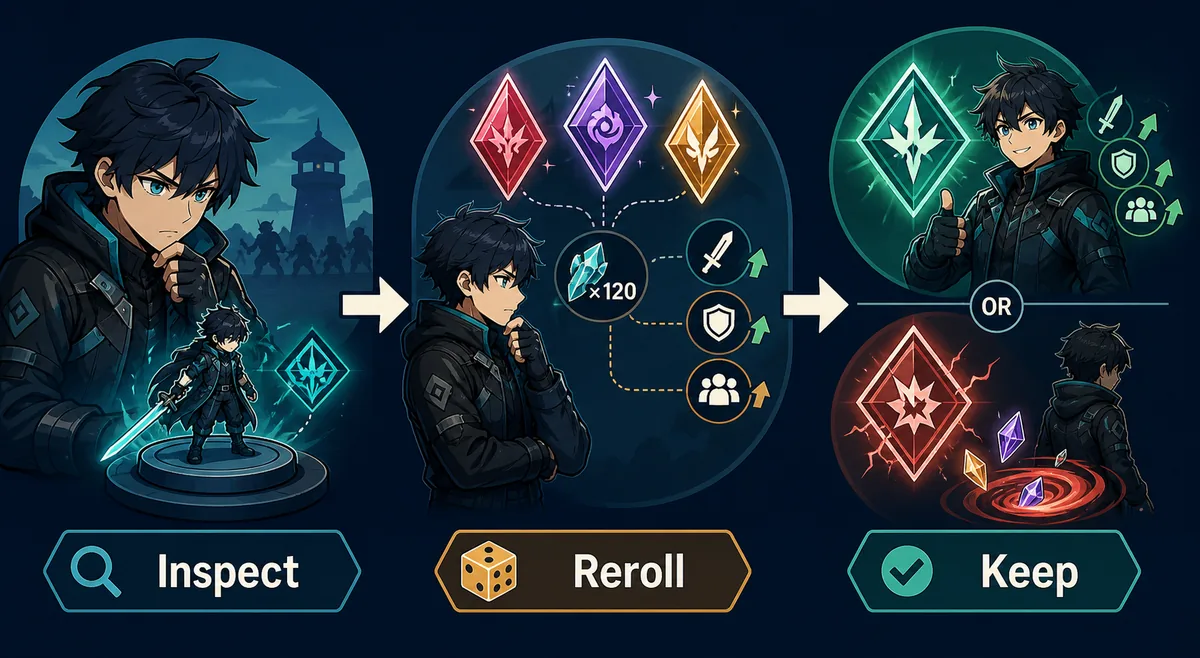
Reroll when you can name the current problem and the new trait would solve it with reasonable confidence. For example, if a carry repeatedly misses a wave breakpoint, a damage or consistency improvement has a clear test. If a support unit cannot cover the lane it was chosen for, range or uptime is a more defensible target. If you cannot describe the problem, the reroll is probably a collection impulse rather than account progress.
The stop rule matters as much as the reroll rule. Set a resource limit before opening the trait menu, decide which outcomes are good enough, and stop when the unit performs its role. Do not spend a full stock of materials to convert a useful trait into a marginal improvement while a banner, upgrade, or missing role still has higher value.
- Inspect the unit and role before rerolling.
- Compare the trait with a real stage, boss, or placement problem.
- Set a maximum spend and a good-enough result before the first reroll.
- Keep a functional trait when the next roll is only a cosmetic or theoretical upgrade.
A resource plan that protects your account
Trait decisions compete with summons, upgrades, codes, and stage progression. Treat the resource as a budget with an opportunity cost. A reroll on a temporary bridge unit should not consume the same budget as a long-term meta core, and a high-tier unit should not automatically receive every scarce material if your account still lacks economy or support coverage.
Use a simple three-level plan. First, reserve enough currency for the next account milestone. Second, fund the unit that currently blocks progression. Third, spend remaining resources on optimization. This order prevents a small trait improvement from delaying the extra placement, evolution, or role slot that would produce a larger clear improvement.
- Reserve resources for a missing role or confirmed upgrade before optimizing a stable unit.
- Use working codes before planning a summon or reroll budget, then re-check the real balance in game.
- Treat community costs and trait names as time-sensitive notes, not permanent rules.
How to re-check traits after an update
After a balance update, do not immediately rebuild the entire account from an old screenshot. First identify what changed: unit base stats, trait behavior, stage difficulty, enemy health, placement limits, or reward pacing. Then test the affected unit in one representative wave stage and one boss or long-run scenario. A role can move in priority even when its trait text looks unchanged.
Keep a small change log with the date, unit role, observed problem, and result. This makes the next Anime Vanguards tier list review easier and prevents memory from turning a single lucky run into a universal claim. When official patch notes or in-game text are unavailable, label the conclusion as an observation and invite a fresh check rather than presenting it as a hidden formula.
- Confirm the current version and in-game trait text.
- Retest one ordinary wave scenario and one boss or long-run scenario.
- Compare the unit with the role it competes for, not only with its old self.
- Update the recommendation only when the observed decision changes.
Trait decision matrix
Use this matrix as a starting filter. It describes what to test, not an official trait ranking or a guarantee that one roll works for every account.
| Unit role | Keep when | Consider a reroll when | Why |
|---|---|---|---|
| Main DPS | The trait makes a real wave or boss breakpoint reliable. | The unit repeatedly misses its job and the budget allows a targeted test. | Consistency usually beats a theoretical ceiling that needs perfect support. |
| Boss DPS | The effect matters during the boss damage window. | The trait does not improve the boss scenario you actually play. | Boss timing can matter more than ordinary wave damage. |
| Support | Coverage, uptime, or survival improves for several key units. | The support unit still cannot reach or maintain its intended effect. | A support bottleneck is often range or uptime, not raw damage. |
| Economy | The trait advances a meaningful placement or upgrade timing. | The trait never changes the next purchase in a real run. | Economy value is measured by timing and stability, not one large number. |
A five-step trait check before spending
1. Name the role
Write down whether the unit is your main DPS, boss answer, support, economy piece, or temporary bridge. If the role is unclear, do not optimize yet.
2. Name the bottleneck
Choose one observable problem: missed breakpoint, short range, poor uptime, fragile placement, or delayed next purchase. Avoid vague goals such as better.
3. Set the budget
Reserve currency for the next upgrade or missing role, then decide the maximum reroll spend. A budget protects the account from a long unlucky sequence.
4. Test the result
Use one ordinary wave and one boss or long-run scenario. Compare the decision the trait enables, not only the number printed in the menu.
5. Stop and record
Keep the result when it solves the bottleneck. Record the date and version so a future update can be checked without relying on memory.
Anime Vanguards trait guide FAQ
What is the best trait in Anime Vanguards?
There is no reliable universal answer without the current trait pool, version, unit role, and account goal. The best practical trait is the one that solves the unit's current bottleneck and improves a real wave, boss, support, or economy decision.
How do I know when to reroll traits in Anime Vanguards?
Reroll when you can name the problem, identify the kind of improvement that would solve it, and set a maximum budget first. If the unit already performs its role and the next roll is only marginal, keeping the current trait is usually the safer decision.
Should DPS or support units get trait priority?
Give priority to the unit that currently blocks progression. A DPS trait may be best for a missed damage breakpoint, while a support trait can be stronger when range, uptime, or survival is the actual reason a run fails.
Are Anime Vanguards trait names and costs permanent?
Treat them as time-sensitive. This guide intentionally avoids claiming a permanent official list of names, costs, or hidden weights. Verify the current in-game text and update notes before spending scarce resources.
Bottom line
A good Anime Vanguards trait guide should improve a decision, not encourage endless rerolls.
Match the trait to the unit role, test it against a real bottleneck, protect the budget, and re-check the result after updates.
Sources and limits
Trait behavior, costs, names, and balance values can change inside a live Roblox experience. The page is an editorial decision framework, not an official formula or a claim that the illustrated scenes are real screenshots.