
The short answer
Treat Memoria as a unit-specific progression or effect layer that must be read together with the unit, its trait, and the current version. The exact Memoria pool, shard source, upgrade requirement, and practical ranking can change after events or balance updates. Before spending, open the current in-game panel, write down the requirement you can actually see, then ask whether the effect solves your account's bottleneck. A high-rarity or popular Memoria is not automatically the best choice for every DPS, support, or economy unit.
What Memoria changes in Anime Vanguards
Start by separating three things that are easy to mix together. A unit's base kit determines its job, a trait modifies part of that job, and Memoria is a separate progression or effect question that should be verified from the current game text. If you call every improvement a trait, you may spend a reroll budget on a problem that actually needs shards, an evolution item, or a different unit slot.
The practical test is a breakpoint. Does the Memoria let the unit defeat a common enemy in fewer attacks, act during a boss window, cover a second lane, keep an effect active, or reach the next placement on time? If it only makes a menu number look better but does not change a run, record it as a small upgrade rather than a reason to empty your account.
- Read the current in-game description before trusting a community name or old screenshot.
- Keep facts, personal testing, and editorial ranking language separate.
- Do not assume that the best Memoria for one unit role is best for the whole roster.
How to check Memoria sources, shards, and upgrades
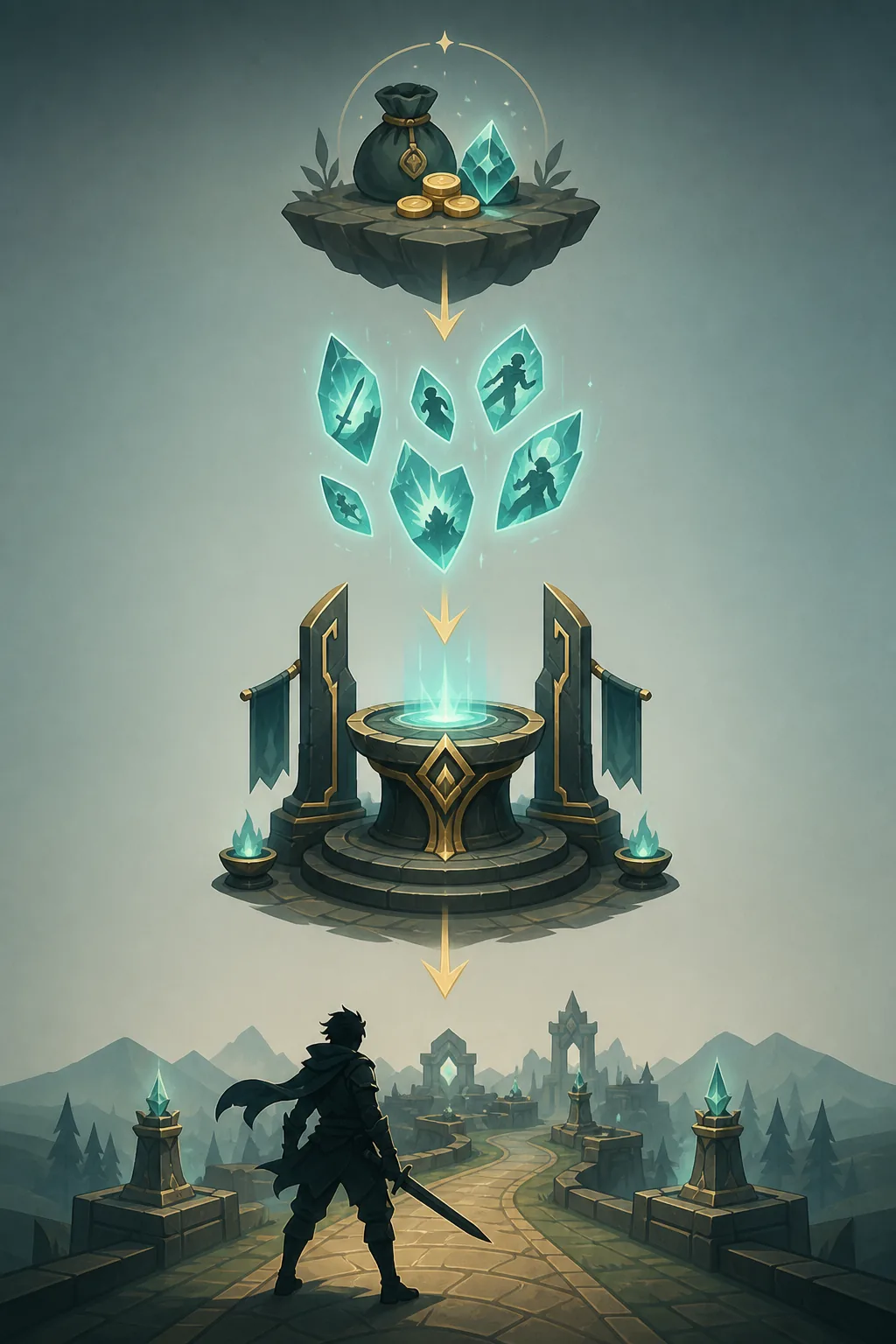
Search intent around Memoria is often a how-to question: players want to know where a Memoria comes from, whether shards are needed, and what changes after an upgrade. Because these requirements can be tied to an event, quest, unit, or current menu, use a four-part check instead of copying a fixed number from a video. First identify the exact unit and version. Then record the visible source, requirement, and upgrade result.
When a guide or video uses a different name, compare the wording with the game rather than guessing that two names are the same. A community wiki can point you toward a lead, but it is not the same as an official patch note. If the source is unavailable or the text has changed, publish the uncertainty: say what can be checked in game and what still needs confirmation.
- Confirm the unit and current event or stage before farming anything.
- Record the exact shard or material label shown in the current panel.
- Check whether the requirement is account-wide, unit-specific, or temporary.
- Test the result before spending the rest of the stock.
Judge Memoria value by unit role, not popularity
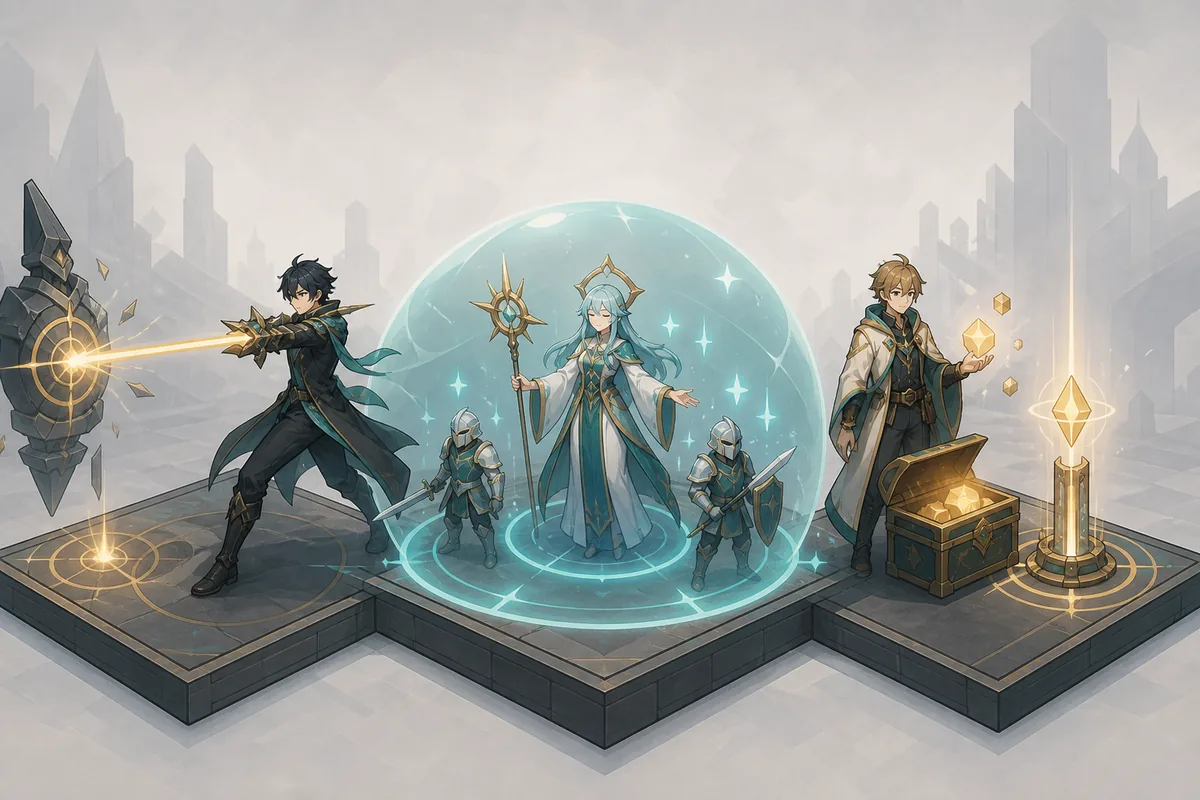
For a main DPS, start with damage consistency and practical timing. A Memoria that changes a wave breakpoint or makes the boss window more reliable can matter more than a flashy maximum number. For a support unit, range, uptime, survivability, and the number of important allies affected are usually better tests. For an economy unit, measure whether the next placement or upgrade arrives sooner in a real run.
This is why a Memoria tier list should be a decision aid, not a permanent universal ranking. The same effect can be excellent on a unit with a clear bottleneck and weak on a unit whose problem is placement, cooldown, or team coverage. Compare the effect with the role you would lose by using another resource, then keep the option that improves the account decision you actually face.
- DPS: test attacks to clear, boss timing, consistency, and required support.
- Support: test range, uptime, survival, and how many carries benefit.
- Economy: test the timing of the next purchase, placement, or evolution.
- Flexible units: compare the Memoria against the role the roster is missing.
Protect materials, gems, and reroll budget
Memoria competes with summons, traits, evolutions, codes, and stage progression. Give the account a budget before you farm or upgrade. Reserve enough currency for the next confirmed milestone, fund the unit that currently blocks progress, and only then optimize a unit that already clears its job. This order prevents a small Memoria gain from delaying a missing support slot or a stronger evolution.
Working codes can change the amount of gems or rerolls available, so check the current Anime Vanguards codes page before making a plan. Use the Anime Vanguards tier list and units database to compare roles, then use the trait guide when the decision is actually about rerolling a trait.
- Set a maximum spend before opening the Memoria menu.
- Do not optimize a temporary bridge unit with the same budget as a long-term core.
- Keep a functional result when the next upgrade is only theoretical.
- Record the date so an old cost does not become a new claim.
Re-check Memoria after an update or event
Memoria terms are especially sensitive to live-service changes. After an update, check whether the unit pool, event source, shard label, upgrade text, stage difficulty, enemy health, placement limit, or reward pacing changed. Do not rebuild your entire account from one old screenshot. Retest the unit in one representative wave and one boss or long-run scenario, then update the recommendation only if the practical decision changed.
A small log makes the next review easier. Write the date, unit, role, visible Memoria text, source, problem tested, and result. When a public source is unavailable, label the note as an observation rather than an official formula. That distinction keeps this guide useful without pretending that a changing Roblox experience has permanent numbers.
- Check the current in-game text before comparing old screenshots.
- Repeat both a normal-wave test and a boss or long-run test.
- Compare against the competing role, not only against the unit's old result.
- Update the page when the account decision changes, not for every rumor.
Memoria decision matrix
Use this matrix to choose a test. It is an editorial framework, not an official permanent Memoria ranking or a guarantee that one result works for every account.
| Unit role | Keep or invest when | Wait or reconsider when | Best test |
|---|---|---|---|
| Main DPS | The effect makes a wave or boss breakpoint reliable. | It does not change the problem and the unit still misses its job. | Compare attacks to clear and boss timing. |
| Boss DPS | The effect matters during the actual boss window. | It only helps easy waves you already clear. | Test a repeatable boss or long-run scenario. |
| Support | Range, uptime, or survival improves several key units. | The intended lane or effect remains unreliable. | Measure coverage and active time. |
| Economy | A meaningful placement or upgrade arrives sooner. | The next purchase timing stays unchanged. | Measure currency timing in a real run. |
A five-step Memoria check
1. Name the unit role
Write main DPS, boss DPS, support, economy, or flexible bridge. If the role is unclear, do not optimize yet.
2. Name the bottleneck
Choose a visible problem such as damage, range, uptime, survival, or a delayed purchase. Avoid the vague goal of simply becoming better.
3. Verify the current source
Open the in-game Memoria text and record the current unit, event, shard, material, and upgrade wording. Mark anything that still depends on a community report.
4. Run two representative tests
Use one normal wave and one boss or long-run scenario. Compare the decision the Memoria enables, not only a menu number.
5. Set a stop rule
Keep the result when it solves the bottleneck. Stop when the next spend would be marginal or would delay a higher-value role, code, summon, or evolution.
Anime Vanguards Memoria FAQ
What is Memoria in Anime Vanguards?
Treat Memoria as a unit-specific progression or effect layer that should be read with the current unit, trait, and version. The exact names, sources, shard requirements, and values can change, so verify the current in-game text before spending.
What is the best Memoria in Anime Vanguards?
There is no reliable universal answer without the current pool, unit, role, account goal, and game version. The best practical Memoria is the one that fixes the bottleneck in your real wave, boss, support, or economy scenario.
How do you get Memoria shards in Anime Vanguards?
Check the current in-game Memoria panel and the event, stage, quest, or reward source shown there. Do not rely on an old fixed requirement when the live game may have changed; record the visible source and verify it with a current run.
How do you evolve Memoria in Anime Vanguards?
Use the current upgrade or evolution prompt for the specific unit and confirm the listed shard and material requirements. The safe process is to verify the text, gather only the needed budget, then test the result before committing more resources.
Should I choose Memoria before rerolling a trait?
Compare the bottleneck first. If the real problem is range, uptime, economy, or an evolution requirement, Memoria may be the relevant decision; if the unit already has the right progression layer and the issue is a trait effect, use the trait guide instead.
Are Memoria tier lists permanent?
No. Treat a Memoria tier list as a dated editorial snapshot. Event pools, unit roles, costs, stage difficulty, and balance can move, so keep the date and re-test after a meaningful update.
Can I use a trade or value list for Memoria?
This site does not cover item trading or value exchanges. Use official in-game information and the role-based tests above rather than external trade markets.
Summary
A good Memoria guide improves a decision rather than encouraging unlimited farming or rerolls.
Verify the current text, connect the effect to a unit role, test a real bottleneck, protect the account budget, and record the update date before trusting the result again.
Sources and limits
Memoria names, costs, sources, and balance behavior can change inside a live Roblox experience. The direct community reference was used as a lead but may be unavailable during verification; this page is an editorial framework, not an official formula. The three images are explanatory illustrations, not official gameplay or UI screenshots.